
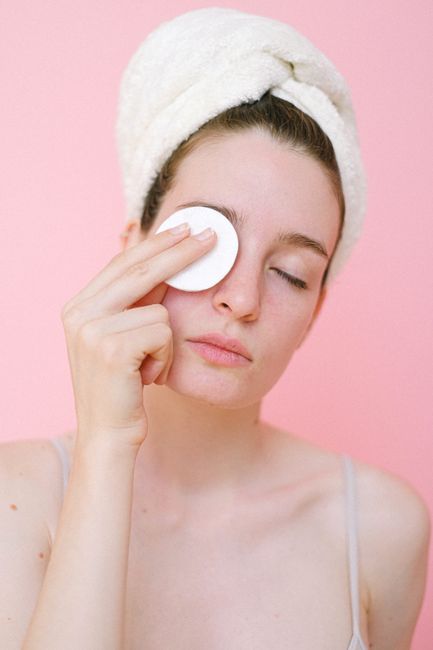
Applying serum after cleansing immediately — without any waiting period — can actually disrupt your skin barrier in summer, especially during evening routines when heat and humidity have already stressed your skin throughout the day. If your skin feels tight, congested, or unusually reactive after your evening skincare routine, the timing of your serum application may be the culprit — not the serum itself.
Quick summary:
- Freshly cleansed summer skin has a temporarily disrupted pH and elevated surface temperature
- Applying active serums too soon can increase irritation and reduce absorption efficiency
- A 1–2 minute pause after cleansing makes a measurable difference
- Streamlining your routine — not lengthening it — is the smarter summer approach
- Skin in your 40s is especially vulnerable to this timing mistake
Why Serum After Cleansing Can Backfire in Summer
Summer evenings feel like the perfect time to double down on skincare. The day is done, sunscreen is off, and your skin is finally clean. So you cleanse, and immediately reach for your serum — it feels logical. But there’s a problem that most routines overlook: your skin’s surface condition immediately after cleansing is not neutral.
The skin’s natural pH sits between 4.5 and 5.5. Most cleansers — even gentle ones — temporarily raise that pH, leaving the skin surface slightly alkaline and more permeable. On summer evenings, this is compounded by sweat residue, elevated skin temperature from heat exposure, and transepidermal water loss (TEWL) that has been building all day. According to research published on PubMed, TEWL increases significantly during summer months, correlating with a weaker skin barrier function — meaning your skin is already in a more reactive state before you’ve even touched a serum.
When you apply an active serum — niacinamide, vitamin C, AHAs — onto this unsettled surface, the skin doesn’t absorb it efficiently. Instead, it can trigger mild inflammation, stinging, or a sensation of tightness that many people mistake for the serum “working.” It isn’t. It’s your skin barrier signaling overload.
What Actually Happens to Your Skin Right After Evening Cleansing
The Two-Minute Window Nobody Talks About
Immediately after rinsing off your cleanser, your skin is in a transitional state. The acid mantle — the thin, slightly acidic film that protects against environmental aggressors — needs time to begin restoring itself. Studies suggest it takes approximately 30 minutes for the skin’s pH to fully normalize after cleansing, but the first 1–2 minutes represent the most vulnerable window. Applying a serum in this window is similar to painting a wall before the primer has set: the product sits on the surface rather than absorbing into the layers where it does its real work.
Summer Heat Makes This Window Worse
In summer, your skin surface temperature is typically 1–2°C higher than in winter, which accelerates water evaporation from the skin. The moment you cleanse and don’t immediately seal with a hydrating layer or allow skin to settle, you accelerate that moisture loss. This is why some people find their skin feels drier in summer evenings than in winter — paradoxically, the heat is pulling moisture out faster than the season would suggest. For women in their 40s, where natural ceramide production has already begun declining, this effect is noticeably amplified. If you’re looking to simplify your routine in response, this guide on cleansing order for 40s skin covers the underlying logic well.
5 Proven Ways to Apply Serum After Cleansing Without the Backfire
1. Wait, Then Apply — The 90-Second Rule
After cleansing, simply wait 90 seconds before reaching for your serum. Pat your face dry with a clean, soft towel — don’t rub — and let the skin temperature drop slightly. This brief pause allows the skin’s surface pH to begin stabilizing, and allows residual heat from the water to dissipate. It sounds minimal, but it meaningfully changes the surface condition your serum is landing on.
2. Apply Serum After Cleansing on Slightly Damp — Not Wet — Skin
There’s a persistent myth that serums absorb better on dripping-wet skin. In practice, excess water dilutes water-based serums and can prevent oil-soluble actives from making proper contact. The sweet spot is slightly damp skin — about 80% dry. At this level of hydration, the outermost skin layer (stratum corneum) is more receptive to active ingredients without being so saturated that the serum slides off.
3. Use Less, Not More
In summer, the skin’s sebum production increases, and the environment itself provides more ambient humidity. This means your skin needs less product to achieve the same effect as in cooler months. A pea-sized amount of serum — roughly 2–3 drops — is sufficient for the full face. Overloading the skin with product on a hot evening is one of the fastest routes to congestion and milia formation, particularly around the cheeks and forehead.
4. Press, Don’t Rub
Application technique matters more in summer because the skin is already sensitized. Rubbing a serum into freshly cleansed summer skin creates friction heat and can activate skin reactivity. Instead, dispense the serum into your palms, warm it slightly between your hands for 5 seconds, then press gently onto the face in an upward motion. This method improves absorption and avoids mechanical irritation on a compromised summer barrier. Research from the American Academy of Dermatology consistently recommends pressing over rubbing for active ingredient application.
5. Sequence Matters: Lightest to Richest, Always
Even in a simplified summer evening routine, the layering order of serum after cleansing remains critical. Start with the thinnest, most water-based formula and move toward richer textures. If you’re using a vitamin C or niacinamide serum, it goes on before any heavier moisturizing step. Reversing this order — applying a rich moisturizer before a watery serum — effectively blocks active ingredient penetration. For a deeper look at layering logic, the skincare layering guide on avoiding absorption issues walks through this in detail.
Signs Your Summer Evening Routine Is Working Against You
It’s easy to assume that skin reactions in summer are caused by new products or seasonal allergies. But often, the issue is routine timing and overloading. Watch for these signals:
- Stinging or warmth when applying serum immediately after cleansing — indicates compromised barrier and pH imbalance
- Congestion or new small bumps around the forehead and cheeks in summer — often caused by over-application or layering too many products on hot skin
- Serum “pilling” or rolling off — happens when skin surface is too wet or not properly prepared
- Unexpected dryness the morning after — a sign that evening TEWL is not being adequately addressed before serum application
- Skin that feels tight immediately after moisturizing — often caused by applying actives on a disrupted acid mantle that hasn’t had time to recover
If you’re noticing three or more of these signs regularly, it’s worth stepping back and simplifying before adding new products. Your routine may need less, not more.
How KLEORIN Fits Into a Slow Summer Evening Routine
KLEORIN’s approach has always been about keeping skin, not fixing it. The KLEORIN Vita-C Brightening Serum (30ml) — formulated with niacinamide, glutathione, and vitamin C — is designed specifically to work efficiently at lower application volumes. On summer evenings, 2 drops applied 90 seconds after cleansing onto slightly damp skin is genuinely enough. You don’t need to layer multiple serums or rush the process.
This philosophy — doing less, more intentionally — is what we call the slow glow. It’s not about cutting corners. It’s about understanding that your skin’s capacity to absorb, restore, and maintain itself is already there. Your routine exists to support that process, not override it.
FAQ
Q: How long should I wait after cleansing before applying serum in summer?
A: A minimum of 90 seconds is recommended, though 2 full minutes is ideal. This allows your skin’s surface pH and temperature to begin normalizing after cleansing. In summer, skin is under additional heat stress, so the waiting period matters more than in cooler seasons. Pat dry, breathe, then apply.
Q: Should I skip toner before serum after cleansing in summer?
A: It depends on your toner. If your toner is alcohol-based or highly astringent, skipping it in summer reduces the risk of over-stripping an already stressed barrier. If it’s a gentle, hydrating toner that helps restore pH balance, a light layer can actually support better serum absorption. The key is keeping the routine minimal — each additional step introduces more variables that can disrupt skin in summer heat.
Q: Why does my skin feel worse in summer after my usual evening routine?
A: Summer changes your skin’s baseline condition — higher TEWL, elevated surface temperature, increased sebum production, and a more reactive barrier after sun and heat exposure throughout the day. A routine that works in spring or autumn may genuinely be too much for summer evenings. Reducing product volume, waiting before applying serum after cleansing, and simplifying to 2–3 steps is often enough to resolve unexplained summer sensitivity.
The most effective summer evening skincare isn’t the most elaborate one — it’s the one that understands what your skin actually needs at the end of a hot day. Cleanse gently, wait, apply your serum after cleansing with intention, and let your skin do what it already knows how to do. That’s the slow glow in practice.